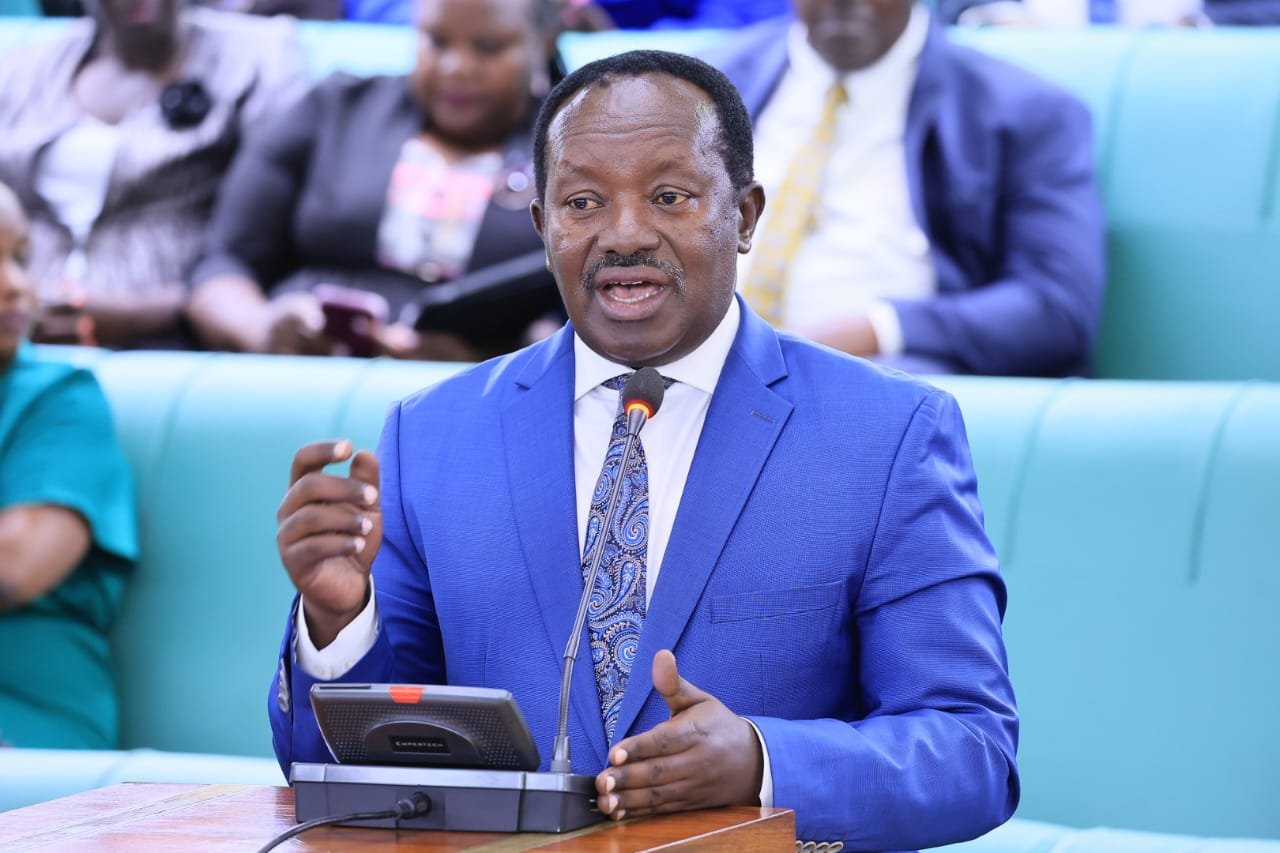
KAMPALA, PARLIAMENT — Nyabushozi County MP Wilson Kajwengye has urged Parliament to amend recommendations on human-wildlife conflicts to provide for farmers whose privately constructed water sources are used by wildlife without compensation.
Speaking during parliamentary proceedings, Kajwengye highlighted the challenges faced by communities surrounding Lake Mburo National Park, where access to reliable water remains important for farming and livestock keeping. He argued that residents should not be left to bear the financial burden of wildlife-related losses without appropriate consideration.
The MP noted that Lake Mburo, which he described as the area’s main permanent water source, is located within Lake Mburo National Park and fenced off from surrounding communities. He said this presents challenges for residents who depend on alternative water sources to support their agricultural activities.
Kajwengye explained that wildlife sometimes leaves the park to access water sources that farmers have constructed using their own money. These facilities are important investments for farmers, who rely on them to provide water for their livestock and sustain their livelihoods.
He questioned the fairness of a situation in which farmers invest their resources in developing water sources that are subsequently used by wildlife, yet the resulting losses are not compensated. Emphasising his concern, he told Parliament: “No, that’s not fair.”
Kajwengye called for the Committee’s recommendations to be amended to take these losses into account. He wants the concerns of farmers whose water sources are affected by wildlife to be recognised as part of efforts to address the wider challenges associated with human-wildlife conflict.
His appeal highlights the difficulties faced by communities living near protected areas, where wildlife conservation efforts can intersect with farming, livestock keeping and access to essential resources. For many residents, privately constructed water sources represent a significant investment that supports their livelihoods.
The proposed amendment would require consideration of whether and how losses involving privately funded water sources should be addressed within the relevant recommendations and compensation framework. Any decision would need to clarify the circumstances under which claims may qualify and how such losses would be assessed.
Kajwengye’s intervention has brought renewed attention to the need to balance wildlife conservation with the interests of communities living around Lake Mburo National Park. The central issue is whether farmers whose investments are affected by wildlife should receive formal recognition and appropriate consideration in measures designed to address human-wildlife conflict.