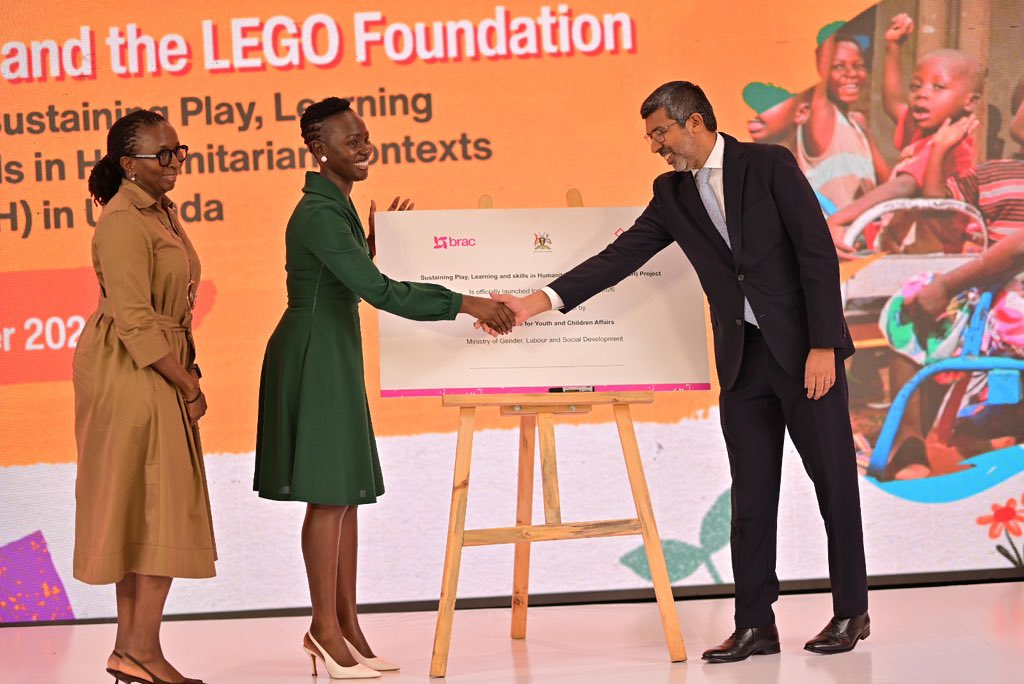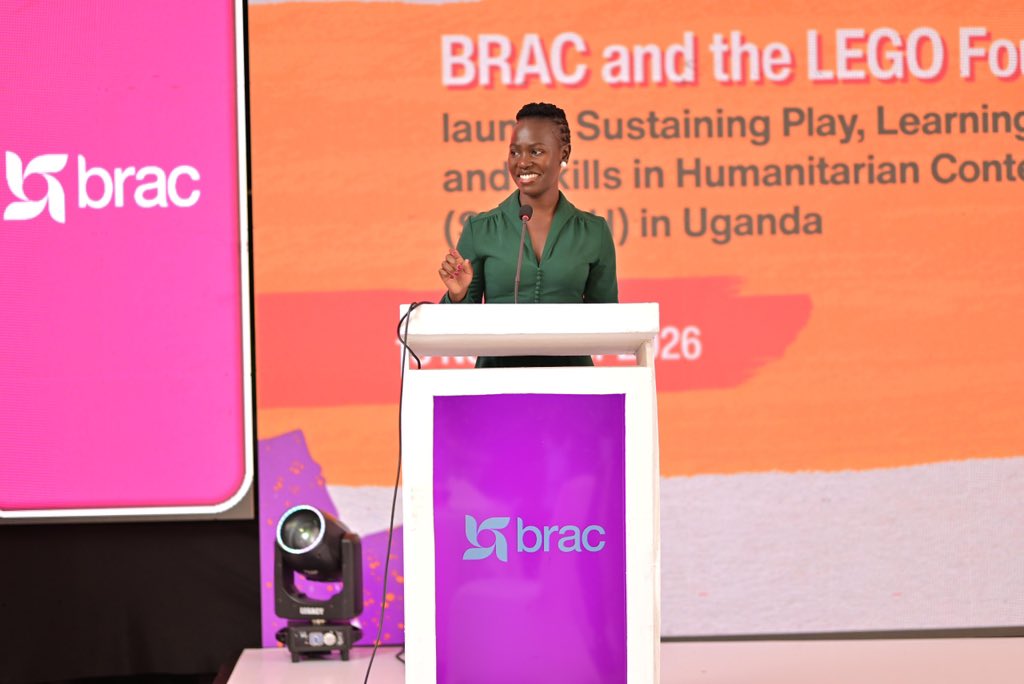
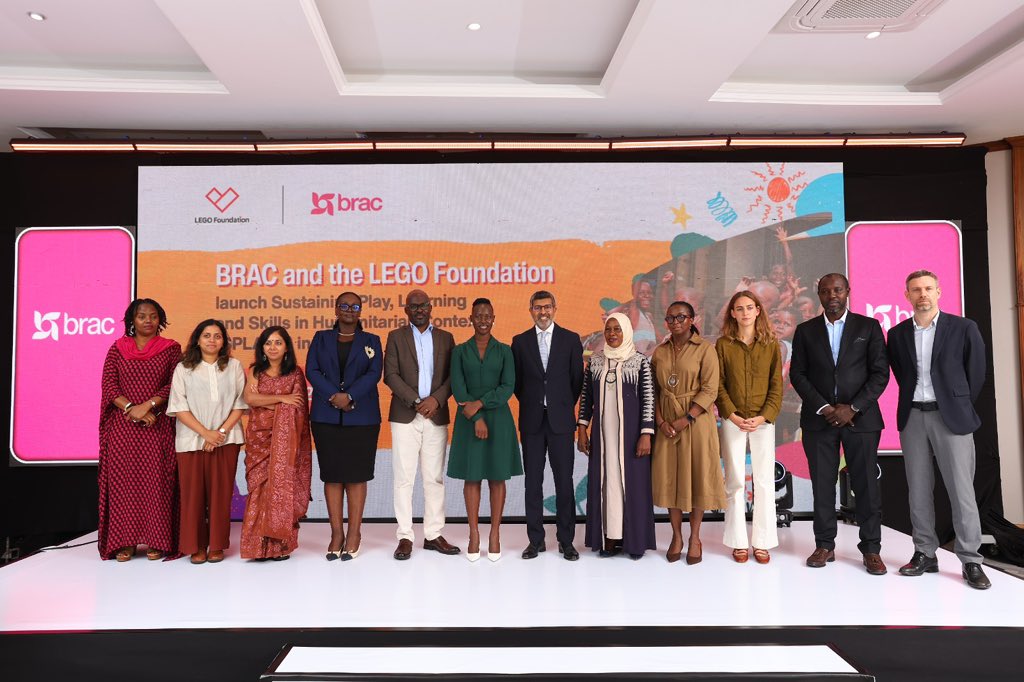
KAMPALA, UGANDA — The Minister of State for Gender, Labour and Social Development in charge of Youth and Children Affairs, Hon. Dr. Lakisa Mercy Faith, has officiated at the launch of the Sustaining Play, Learning and Skills in Humanitarian Contexts (SPLASH) Programme, a five-year initiative aimed at improving early childhood development and learning opportunities for children in refugee settlements and neighbouring host communities.
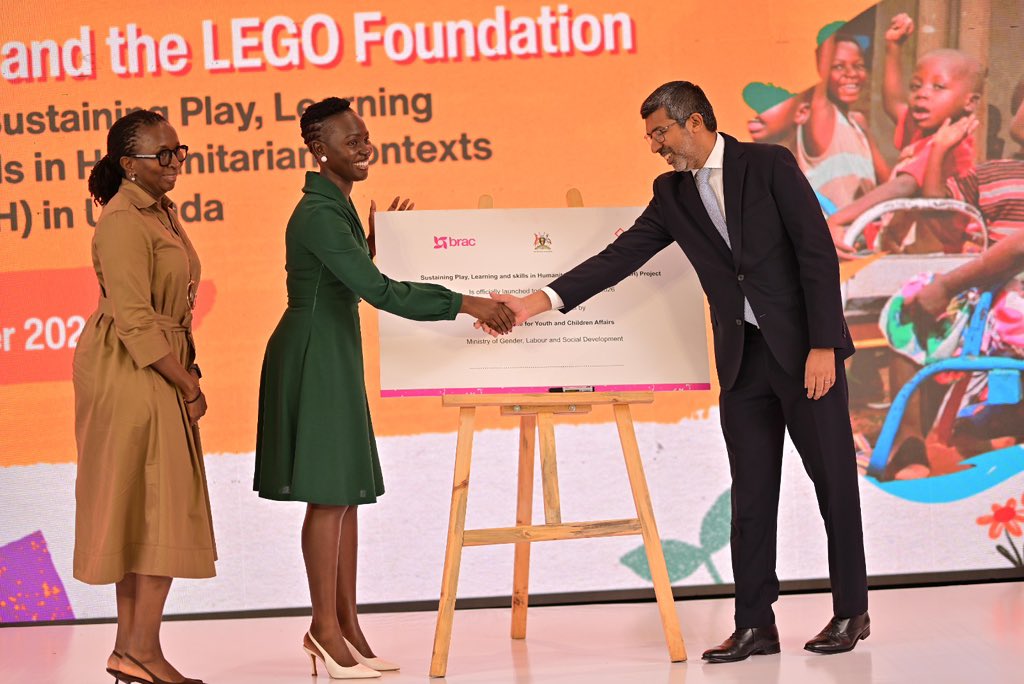
The programme, implemented by BRAC Uganda in partnership with the LEGO Foundation, is expected to benefit more than 47,000 children aged between zero and six years across Rhino, Imvepi and Bidibidi refugee settlements and surrounding host communities in Madi-Okollo, Terego and Yumbe districts.
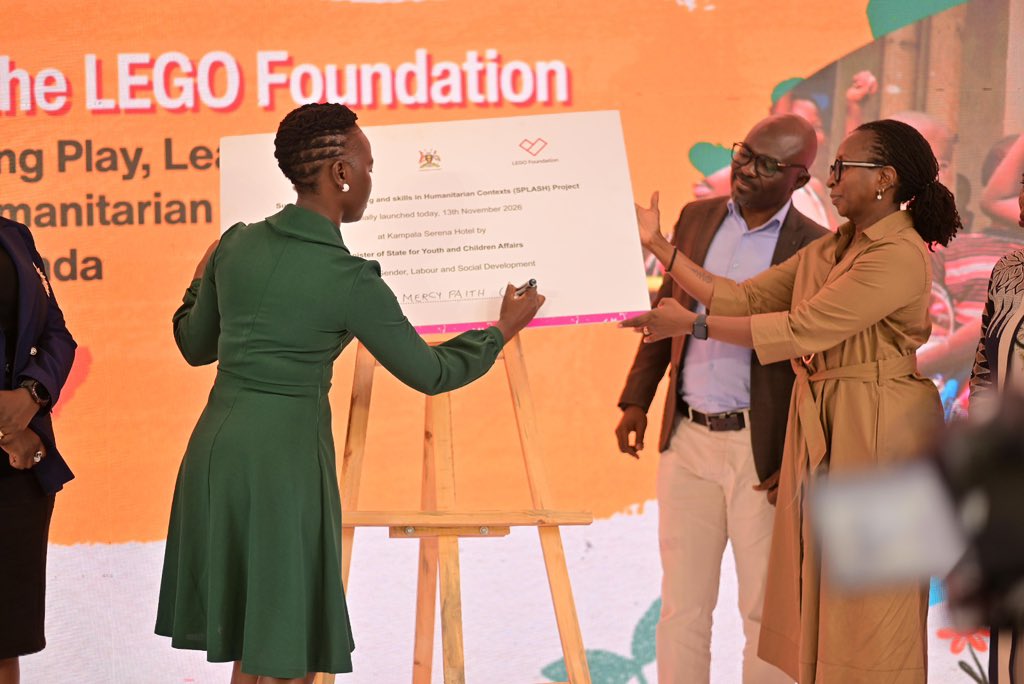
In her remarks at the launch, Dr. Lakisa emphasised the importance of investing in early childhood development, describing it as a critical component of human capital development and the country’s long-term development agenda.
She noted that every child deserves a decent childhood, with opportunities to learn, develop talents and build essential life skills through play-based activities.
The Minister said the SPLASH initiative reinforces Government’s commitment to ensuring that children, particularly those growing up in vulnerable and humanitarian settings, have access to quality early learning opportunities, safe environments and supportive caregiving.
She further observed that improving children’s well-being requires addressing the circumstances of their families, noting that household poverty and economic instability can undermine efforts to provide children with a supportive environment for growth and development.
Under the SPLASH Programme, BRAC Uganda plans to strengthen 150 Humanitarian Play Labs to provide safe and stimulating spaces where children can develop communication, language, social and emotional skills, creativity, confidence and problem-solving abilities.
The first 100 play labs are scheduled for renovation and equipping in Rhino and Imvepi refugee settlements in 2027, while another 50 will be established in Bidibidi in 2028.
Beyond supporting children, the initiative will extend assistance to approximately 44,500 caregivers and 906 educators and play leaders, bringing the programme’s anticipated direct reach to 92,406 people.
Selected households will also benefit from livelihood and enterprise development support, financial literacy training, links to Village Savings and Loan Associations, health subsidies, home coaching and six-month consumption support.
BRAC Uganda Programmes Manager Joseph Kabanda said the initiative builds on the organisation’s previous interventions in refugee settlements, where more than 5,000 children had benefited from its Humanitarian Play Lab model.
He explained that the expansion would increase access to structured play-based learning and provide more children with opportunities to develop essential skills before joining formal education.
BRAC International Executive Director Abed Shameran also emphasised that children living in humanitarian settings should not be denied opportunities to learn and thrive because of the circumstances surrounding their lives.
The SPLASH Programme forms part of a five-year, US$50 million partnership between BRAC and the LEGO Foundation targeting 400,000 children and adolescents in humanitarian settings in Uganda and Bangladesh.
In Uganda, implementation will involve Government institutions, the Office of the Prime Minister and the United Nations High Commissioner for Refugees (UNHCR).
The initiative is expected to strengthen early childhood development, improve school readiness and support families and educators in creating nurturing, inclusive and supportive environments for children.