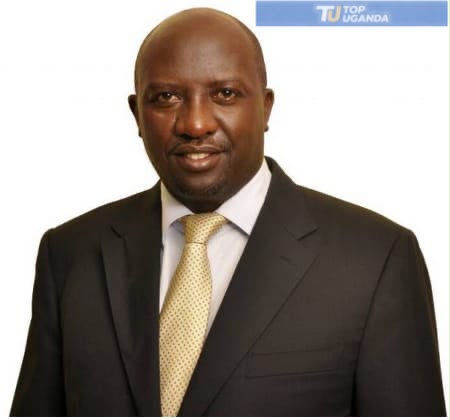
BUSHENYI — 26 SEPTEMBER 2026: Former Bushenyi District LCV Chairperson Wills Bashasha has come under renewed scrutiny as the leadership dispute at Igara Growers Tea Factory Ltd continues, with farmers, workers and suppliers increasingly concerned about the prolonged crisis and the future of the factory.
Bashasha’s involvement in the Igara leadership contest dates back to September 2024, when he contested for the position of Board Chairperson representing Bitereko Zone. He lost the election and signed the declaration of results. However, his involvement in the factory’s leadership affairs did not end with the election, as he later became associated with a group led by Ronald Rwankangi, a shareholder from Nyakashaka Zone in Buhweju District.
The dispute involving Rwankangi has been linked to questions surrounding eligibility to serve on the factory’s board. The company’s governance requirements provide that a prospective director must have supplied at least 10,000 kilograms of green leaf in each of the three consecutive years preceding the year of election. Rwankangi’s suspension from the board was challenged through the courts, with the matter reaching the High Court in Bushenyi.
The continuing involvement of Bashasha and his associates has now become part of a wider struggle over the governance and direction of Igara Growers Tea Factory. Their critics accuse the camp of using court actions, correspondence to different institutions and other measures to challenge the sitting leadership. Those allegations remain contested and should ultimately be determined through the appropriate legal and governance processes.
What is increasingly difficult to ignore, however, is the effect of the prolonged dispute on the people whose livelihoods depend on Igara. The factory has reportedly remained closed for about three months, while farmers continue to face uncertainty over payments for green leaf supplied, workers await outstanding salaries and suppliers remain concerned about unpaid obligations.
The crisis comes at a difficult time for Uganda’s tea industry, which has faced major financial pressures following disruptions to international markets, including the effects associated with the COVID-19 pandemic and the Russia-Ukraine war. The resulting pressure on tea prices and factory finances has affected several players across the sector, making stability and effective management particularly important for distressed factories such as Igara.
Government interventions aimed at supporting distressed tea factories have raised hopes among farmers and other stakeholders that outstanding obligations can eventually be addressed. However, allegations from some elders and stakeholders in Greater Bushenyi that actions associated with the Bashasha-Rwankangi camp have complicated efforts to secure financing remain a matter of contention and should be addressed through evidence rather than accusations.
The legal process has also continued to shape the dispute. The High Court in Bushenyi ordered that fresh elections for directors be conducted in accordance with the company’s governing documents and regulations, while the Uganda Registration Services Bureau was directed to assist management in facilitating the election process. URSB subsequently issued a roadmap for the proposed elections, although disagreements have reportedly continued over the process.
For Bashasha, the controversy now presents a critical test of how his continued involvement in the Igara dispute will be viewed by shareholders, farmers and the wider Greater Bushenyi community. Supporters may argue that the leadership questions must be properly resolved, while critics maintain that prolonged political and governance battles risk distracting from the urgent need to restore the factory and protect farmers’ livelihoods.
At the centre of the crisis, however, are not the factions but the tea farmers. They supplied the green leaf, workers kept the factory operating and suppliers provided essential inputs. Their immediate concern is not another leadership confrontation but a functioning factory, payment of outstanding obligations and a transparent, lawful election process. As the dispute involving Bashasha and other stakeholders continues through the appropriate legal and governance channels, the central question remains: how long can Igara Growers Tea Factory remain caught in a leadership crisis while the farmers who depend on it continue to bear the cost?