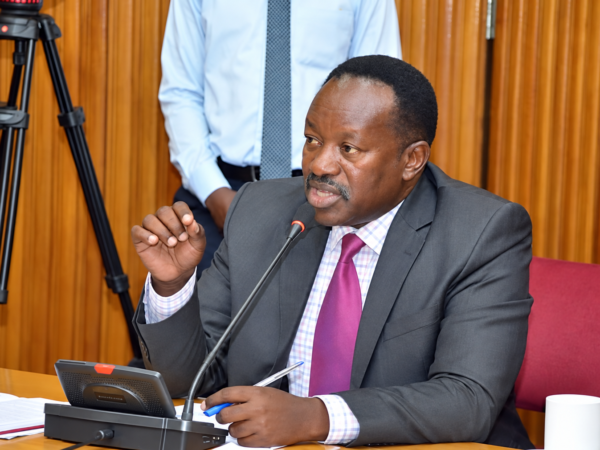
KAMPALA — Hon. Eng. Julius Nakiyi Muntu, Member of Parliament for Budadiri East in Sironko District, has urged the Ministry of Water and Environment to deploy civil engineers across the country to assess and redesign gravity flow water schemes that were constructed more than two decades ago.
Speaking in Parliament, Nakiyi, a professional civil engineer, said many of the schemes were designed when Uganda’s population was significantly smaller and can no longer adequately meet the growing demand for water.
He explained that the design of a water supply system is largely determined by population size and per capita water consumption, which in turn influences the required storage capacity, pipe sizes, system gradients, reservoirs and other supporting infrastructure.
Using Sironko District as an example, Nakiyi said the existing gravity flow schemes were designed in the 1990s when the district had a population of about 50,000 people. He noted that the population has since grown to more than 300,000, creating a significant gap between the original design capacity and current demand.
“The current volume cannot match the demand,” Nakiyi told the House, stressing that continued reliance on infrastructure designed for a much smaller population was contributing to persistent water shortages and system failures.
The legislator further pointed to the Ministry’s stated design-life guidelines, arguing that gravity flow schemes that have operated for more than 20 years should be subjected to comprehensive technical assessment and upgrading rather than relying on repeated repairs.
“Every time they are telling you the pipes have done this, there’s this… because their useful life has been extended,” he observed, highlighting the maintenance burden faced by communities and their leaders.
Nakiyi called for an immediate nationwide assessment and upgrading of old gravity flow schemes to ensure that they meet present-day water needs. He also urged the Ministry to incorporate projected population growth into new designs so that future systems can continue serving communities effectively for decades.
He said planning for water infrastructure should look beyond the current population and anticipate future demand, noting that a scheme designed today must be capable of serving a much larger population when its design period eventually comes to an end.