Members of Parliament have questioned the consistency of Uganda’s anti-corruption campaign, accusing investigative agencies of concentrating their operations on local governments while paying comparatively less attention to ministries, departments and agencies (MDAs), which control the largest share of public expenditure.
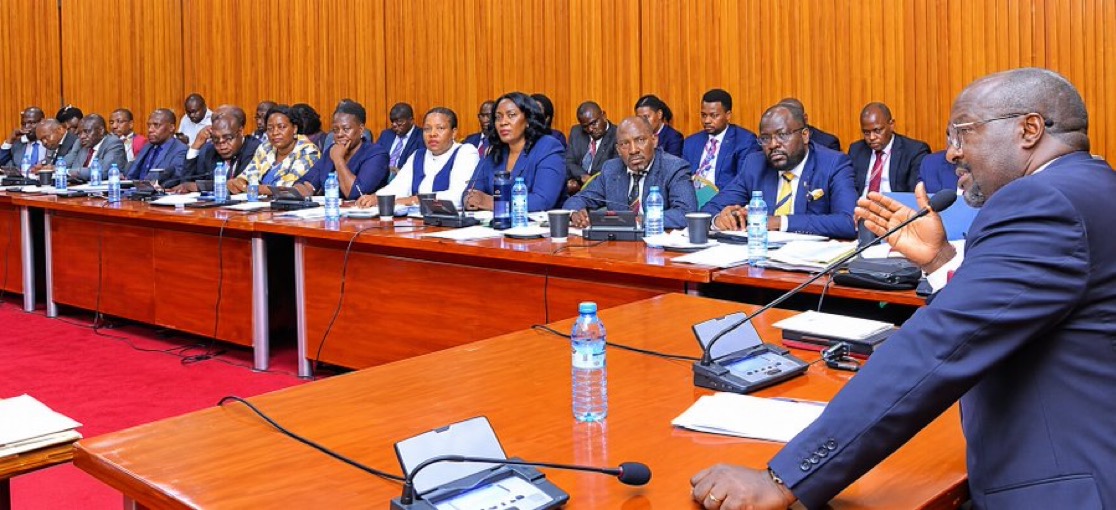
The concerns emerged during an interface between State House officials, led by Comptroller Jane Barekye, and Parliament’s Public Accounts Committee (Central Government), chaired by Kassanda North County MP Patrick Nsamba Oshabe.
The committee questioned the Head of the State House Anti-Corruption Unit (SHACU), Brigadier General Henry Isoke, about the unit’s investigative priorities, performance and justification for maintaining a separate anti-corruption structure under State House.
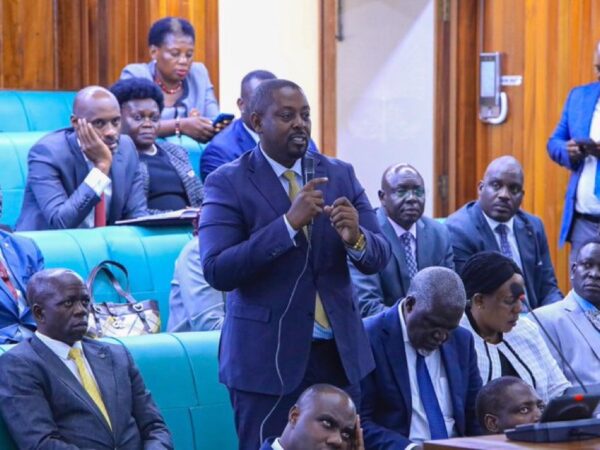
Samia-Bugwe Central MP Richard Wanyama challenged the unit to explain why local governments appeared to attract considerable investigative attention despite controlling a relatively small proportion of the national budget.
“The perception in the public is that your focus is on local government. Everyone fighting corruption goes for local government. Why is the focus on local government?” Wanyama asked.
He noted that local governments receive approximately 8.4 per cent of the national budget, compared with 91.6 per cent allocated to central government institutions and other budgetary commitments, questioning whether agencies managing substantially larger resources face equal scrutiny.
Wanyama argued that concentrating enforcement efforts on institutions managing a smaller share of public resources could undermine public confidence in the impartiality of the government’s anti-corruption campaign.
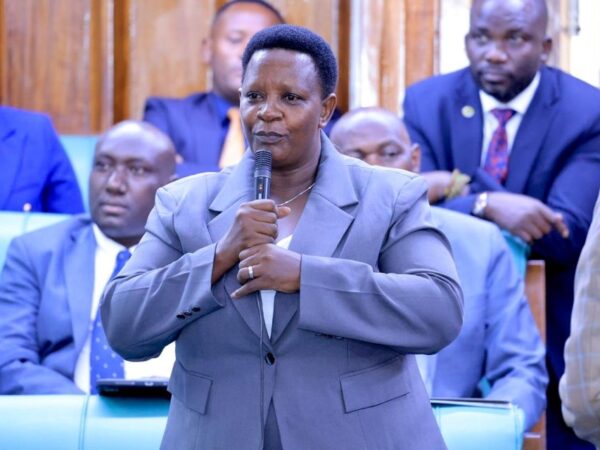
Committee chairperson Patrick Nsamba Oshabe reinforced the concern, warning that focusing on only a small proportion of national expenditure could make government interventions appear more symbolic than comprehensive.
“If government focuses and shows us that it is fighting corruption and it goes for only 8.4 per cent of the budget, then the 91 per cent is not… It is just trying a gesture to show us that you’re doing something,” Nsamba observed.
The legislators maintained that accountability should be applied consistently across all levels of government, regardless of the financial resources, political influence or institutional standing of those under investigation.
In response, Brigadier General Isoke defended SHACU’s focus on local governments, arguing that corruption at the grassroots has an immediate impact on citizens because it directly undermines essential public services.
He explained that the unit prioritises local government cases partly because misappropriation of public funds affects communities through deteriorating roads, inadequate healthcare, shortages of essential supplies and stalled infrastructure projects.
“Local governments because we think that is where miscarriage of service delivery is greatly felt when corruption happens,” Isoke said.
However, Isoke rejected suggestions that the unit had neglected central government institutions, citing investigations involving the Office of the Prime Minister, Uganda Railways Corporation, Ministry of Works, Uganda Human Rights Commission, Ministry of Water and the National Gaming and Lotteries Board.
He also defended the unit against concerns that politically influential individuals and senior public officials were escaping scrutiny, citing investigations involving private individuals and suspected financial crimes.
Among the cases he highlighted was an alleged fraudulent investment scheme in which investors reportedly lost up to Shs13.6 billion.
Isoke said the unit had expanded its investigations to cover emerging economic crimes, including fraudulent investment arrangements, land-related fraud and procurement schemes, which he argued threaten investor confidence and undermine efforts to attract foreign investment.
Providing an account of SHACU’s performance, Isoke told the committee that the unit had arraigned 1,005 suspects before courts of law since its establishment.
He reported that the suspects included 461 civil servants and 550 private individuals allegedly implicated in facilitating corruption involving public officials, land fraud, fraudulent gold transactions and procurement-related schemes.
However, the figures presented contained a numerical discrepancy, with the two categories adding up to 1,011 suspects, six more than the overall figure of 1,005.
The unit’s prosecution record, he added, includes 168 convictions secured through collaboration with the Directorate of Public Prosecutions and the Uganda Police Force.
Of these, 95 convictions involved public officials, while 73 involved private individuals. Isoke further reported that approximately 263 cases were pending before courts, while another 33 investigation files were at different stages of review by the DPP.
He described the results as significant given the unit’s limited human resource capacity, disclosing that SHACU operates with approximately 11 lawyers, two auditors and 24 detectives attached to it by the Directorate of Criminal Investigations.
The parliamentary engagement also raised questions about the relationship between SHACU and Uganda’s established anti-corruption institutions, particularly the Inspectorate of Government, the Police and the DPP.
SHACU was established by President Yoweri Museveni on December 10, 2018, under Article 99(4) of the Constitution, with the original purpose of coordinating corruption complaints submitted to the Presidency and working with constitutionally mandated institutions to facilitate their resolution.
The Inspectorate of Government is constitutionally mandated to eliminate corruption, abuse of authority and abuse of public office, while other institutions have responsibilities relating to financial accountability, investigation and prosecution.
The MPs’ concerns therefore extend beyond the number of arrests and convictions secured by SHACU to whether Uganda’s anti-corruption institutions are effectively following financial trails across government and ensuring that suspected wrongdoing is investigated regardless of the rank or influence of those involved.
The committee’s scrutiny also raises questions about how much public money has been recovered, frozen or protected through SHACU interventions and how many investigations have resulted in financial restitution or improvements in public service delivery.
For the legislators, the central issue is not whether local government officials should be investigated, but whether the same determination is being applied to central government institutions managing substantially larger budgets and controlling major public procurement and development programmes.
The 8.4 per cent budget figure cited during the meeting also places renewed attention on how investigative agencies distribute their resources and whether their priorities reflect the scale of public funds exposed to potential misuse.
Ultimately, Parliament wants anti-corruption agencies to demonstrate that their investigations are guided by evidence, financial risk and public interest rather than concentrating on particular levels of government while leaving others less scrutinised.