
NAMANVE, MUKONO DISTRICT – Minister of State for Trade, Industry and Cooperatives (Industry), Hon. David Bahati, has commissioned Phase Three of East African Medical Vitals Ltd (EAMV), marking another milestone in Uganda’s efforts to strengthen local manufacturing and reduce dependence on imported medical supplies.

During the commissioning, Bahati highlighted the factory’s contribution to Uganda’s industrialisation agenda, noting that local production of medical supplies was helping the country retain foreign exchange, create employment opportunities and strengthen its health security.

According to Bahati, East African Medical Vitals produces approximately 80 million powder-free latex surgical gloves annually, meeting nearly 70 per cent of Uganda’s domestic demand.
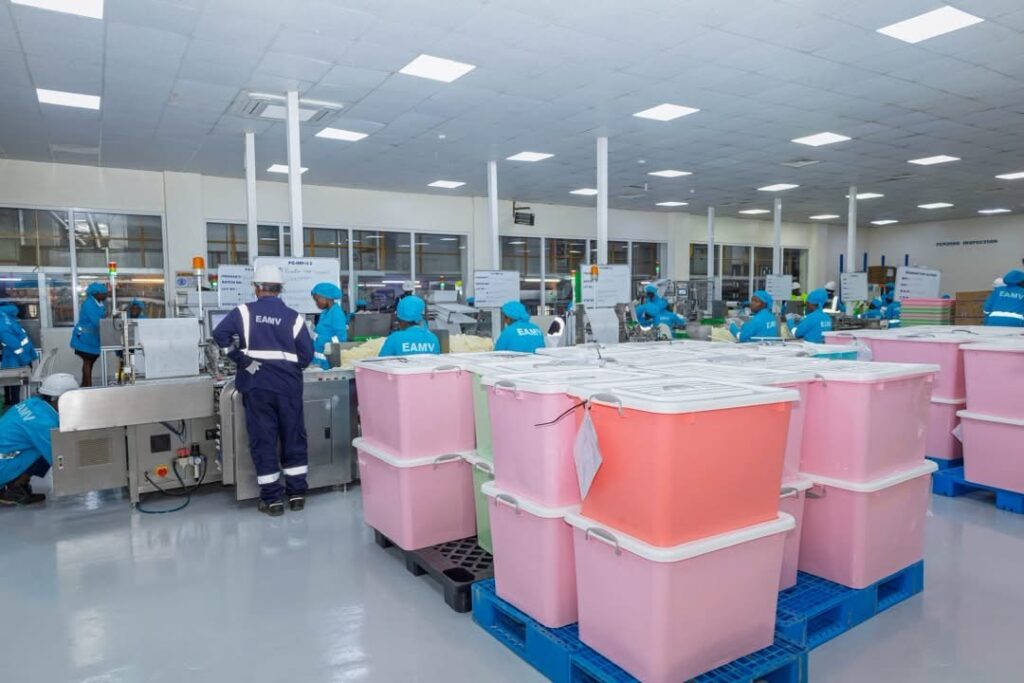
He noted that the factory’s production capacity was saving the country an estimated US$17.8 million in foreign exchange outflows every year, money that would otherwise be spent importing similar products.
Bahati described the investment as a practical demonstration of value addition, import substitution, job creation and improved access to locally manufactured medical supplies.
The Minister also used the occasion to encourage investors to explore opportunities in Uganda’s manufacturing sector, emphasising the country’s potential as a production and distribution centre for the wider East African and African markets.
He called on investors to establish industries, add value to products locally and create employment opportunities for Ugandans, assuring them that the country remained open for business.
Bahati further reaffirmed the government’s commitment to building an independent, integrated and self-sustaining economy through industrial development and increased domestic production.
East African Medical Vitals Ltd, located in the Kampala Industrial and Business Park in Namanve, manufactures surgical and examination gloves for the Ugandan and regional markets.
The commissioning of the third phase represents continued investment in Uganda’s medical manufacturing sector, with the factory expected to contribute to local supply chains and reduce reliance on imported medical consumables.