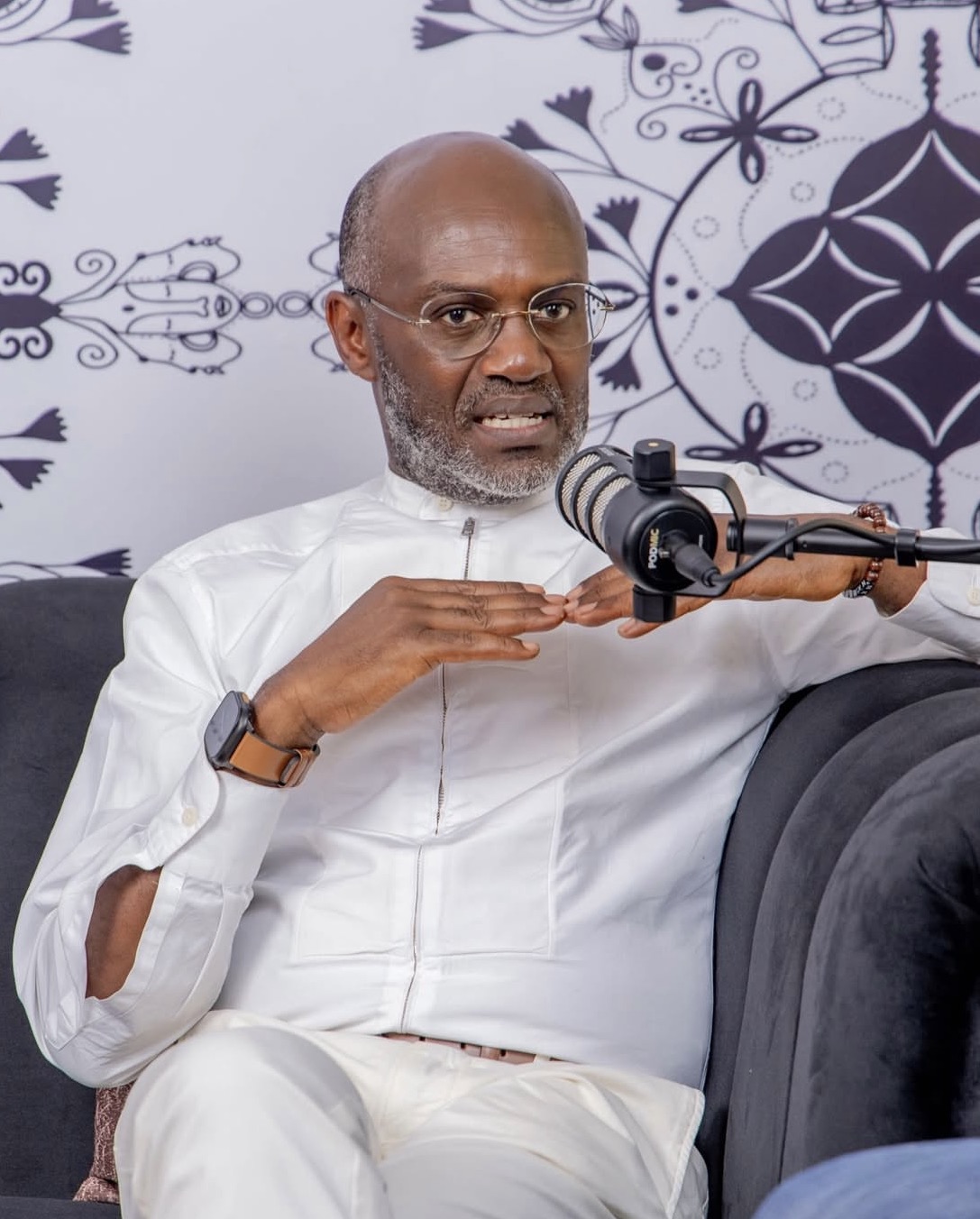
KAMPALA, UGANDA — Political commentator and journalist Andrew Mwenda has revisited the controversial history of the National Social Security Fund (NSSF) Pension Towers project, questioning how a development initially intended to maximise the value of workers’ savings evolved into a prolonged construction undertaking whose cost he estimates has reached Shs480 billion.
In a detailed account of the project, Mwenda traced its origins to NSSF’s acquisition of land in Nakasero, Kampala, in the early 1990s, arguing that decisions made by successive Fund managers, government officials and procurement authorities contributed to delays, additional expenditure and questions about accountability.
Mwenda explained that NSSF initially acquired land at approximately US$50,000 per acre, when the same land would later appreciate significantly in value. He said the Fund subsequently acquired an adjoining plot, bringing the total value of the two properties to an estimated US$5 million at the time of the proposed redevelopment.
According to Mwenda, the original development plan provided for a 14-storey headquarters comprising two underground parking levels and 12 floors above ground. However, the project encountered delays following challenges associated with the construction of Workers House, another NSSF investment in Kampala.
He said the original construction tender was eventually concluded, with Roko Construction Company, commonly known as Roko Construction, selected as the contractor towards the end of 2005. The contractor reportedly mobilised to the site in 2006 and commenced excavation works for the two underground parking levels.
The project took a different direction following the appointment of David Chandi Jamwa as NSSF Managing Director. Mwenda described Jamwa as an exceptionally intelligent individual who recognised that the original architectural design was not sufficiently exploiting the commercial potential of the Fund’s valuable land.
Mwenda said Jamwa engaged an architect identified as Sentongo to prepare a new design that would maximise the investment returns from the property. The proposed development was expanded to 32 floors, comprising 26 floors above ground and six underground levels, significantly increasing the building’s intended capacity.
Following the redesign, Mwenda said Jamwa instructed NSSF’s quantity surveyors to prepare a new Bill of Quantities to establish the estimated construction cost. While the original 14-storey project had been valued at approximately Shs76 billion, the expanded 32-storey development was estimated at Shs136 billion.
He argued that the revised design represented a business decision intended to improve the utilisation of NSSF’s land and increase the potential returns for contributors. Jamwa subsequently approached Roko Construction and asked the company whether it could execute the revised design within the estimated Shs136 billion budget. According to Mwenda, the contractor agreed, and excavation proceeded to accommodate the additional underground parking levels.
However, the decision attracted controversy after questions emerged about whether the revised contract had received the necessary procurement approvals. Mwenda said Jamwa subsequently wrote to the Public Procurement and Disposal of Public Assets Authority (PPDA), seeking approval for the revised arrangement, only to be informed that the authority could not retrospectively approve a decision that had already been implemented.
The matter reportedly attracted the attention of then Attorney General Khiddu Makubuya and Inspector General of Government Faith Mwondha, who questioned the procedures followed in changing the original contract. Mwenda recalled meeting the two officials at the office of then Permanent Secretary and Secretary to the Treasury Chris Kassami, where Deputy Secretary to the Treasury Keith Muhakanizi was also present when the controversy was discussed.
According to Mwenda, Kassami and Muhakanizi raised concerns about the commercial implications of terminating the existing arrangement. He recalled that Kassami questioned whether Jamwa had made the right business decision for NSSF contributors, arguing that the substance of an investment decision should also be considered alongside procedural requirements.
Mwenda said Kassami maintained that procurement procedures should serve their intended purpose rather than become an end in themselves, particularly where a decision could potentially benefit the Fund. He also recalled Muhakanizi warning that terminating the contract could expose NSSF to legal claims from Roko Construction for loss of business opportunity and lead to further delays if the project was subjected to a fresh procurement process.
Despite those arguments, Mwenda said Jamwa was interdicted after the Attorney General and the IGG maintained that the procurement procedures had been violated. He described the decision as a turning point in the project’s history, arguing that an administrative and procurement dispute eventually contributed to years of construction delays.
The consequences of the interruption became more complicated when the excavated construction site developed structural risks. Mwenda recalled that the contractor had already excavated substantial underground sections, requiring retaining walls to support the surrounding soil. With construction interrupted, the site remained exposed to risks that could affect neighbouring infrastructure.
He said Kampala City Council authorities subsequently warned that failure to undertake emergency stabilisation works could cause the excavated structure to collapse, threatening roads on either side of the development, including Lumumba Avenue and Nakasero Road.
Mwenda further explained that Roko Construction was considered the most readily available contractor because it already had equipment and personnel mobilised at the site. He said then NSSF Managing Director Richard Byarugaba engaged the company to undertake emergency works to prevent a potential disaster.
According to Mwenda, Roko quoted approximately Shs60 billion for the emergency works involving the six underground levels. He questioned how a project whose expanded construction arrangement had initially been estimated at Shs136 billion could subsequently require such substantial additional expenditure merely to address the underground section and stabilise the site.
To illustrate the economic dangers of allowing procedural and institutional failures to create expensive emergencies, Mwenda drew a comparison with ancient Rome and the wealthy Roman businessman Marcus Licinius Crassus.
He recounted how Crassus allegedly controlled private firefighting services in Rome and exploited emergencies by negotiating exorbitant payments with property owners whose buildings were burning. Mwenda said the businessman could withdraw his firefighting equipment whenever property owners refused his demands, leaving them with little bargaining power.
Mwenda used the historical example to argue that emergency situations can weaken the negotiating position of public institutions and expose them to excessive costs when they lack alternative service providers or timely interventions.
Returning to the NSSF project, he argued that Byarugaba faced a similar dilemma because Roko was already positioned at the site and could mobilise quickly to undertake the emergency stabilisation works. He maintained that the Fund had little practical choice but to engage the contractor to protect the surrounding infrastructure and prevent further damage.
Mwenda also questioned the prolonged procurement and construction process, saying the project remained affected by successive delays even after the original controversy. He claimed that a new contract was only awarded in 2019, approximately 11 years after the initial construction controversy, further extending the period before the development could be completed.
He said that by 2026, nearly two decades after construction began, the Pension Towers project was still approaching completion, with its overall expenditure having risen to approximately Shs480 billion, according to his account.
For Mwenda, the central issue goes beyond the cost of constructing a commercial building. He argued that the controversy raises fundamental questions about how government institutions balance procurement compliance, commercial judgement, accountability and the protection of workers’ savings.
He challenged policymakers and those responsible for managing public institutions to examine whether the decisions taken throughout the project’s history delivered value to NSSF contributors, particularly given the enormous time and financial resources committed to the development.
Mwenda concluded his account with a pointed question about the beneficiaries of the prolonged and expensive undertaking, asking: “So tell me, who benefited?”
Pension Towers is a major NSSF commercial real estate investment in Nakasero, comprising three interconnected towers with office and retail space, underground parking and frontage along Lumumba Avenue and Nakasero Road. The project’s history has featured procurement disputes, construction delays, changes in design and significant cost revisions, making it an important case study in public investment management and institutional accountability.