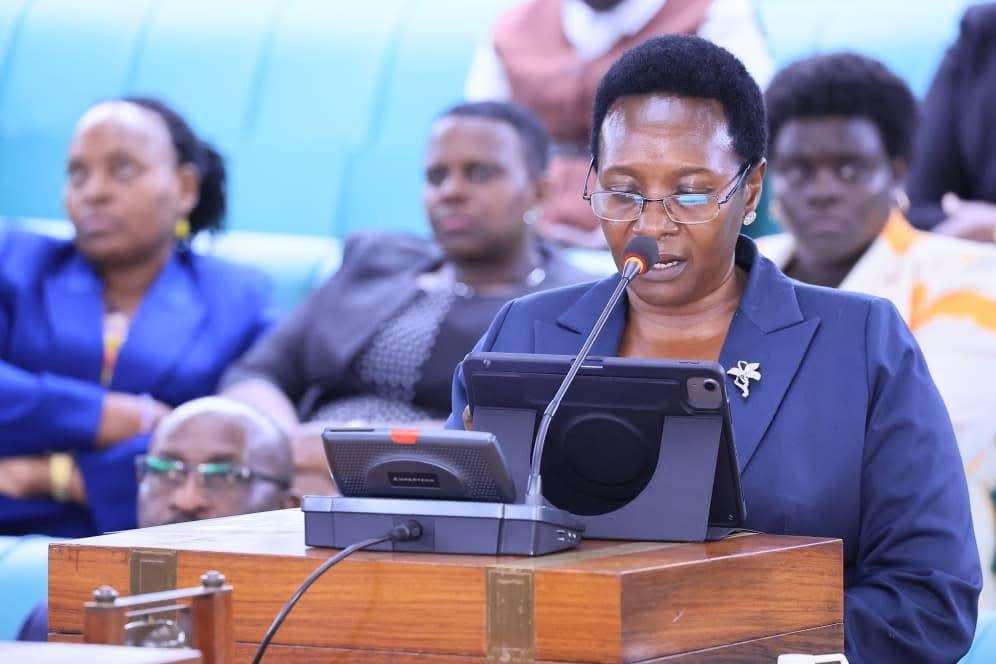
KAMPALA – Kyankwanzi District Woman MP Hon. Ann Maria Nankabirwa has called for a comprehensive approach to addressing Uganda’s persistent power outages, arguing that the challenges extend beyond the operations of the Uganda Electricity Distribution Company Limited (UEDCL) to include generation, transmission and rural electrification.
Nankabirwa, who previously served as Vice Chairperson of the parliamentary committee that investigated the electricity sector, said the country needed to address longstanding weaknesses in the power network rather than place the responsibility solely on UEDCL.
During her contribution to the parliamentary debate, she recalled that a committee investigation conducted in 2012 had recommended the termination of Umeme’s concession over concerns about losses in the electricity sector.
She argued that the government’s decision to allow the concession to run its natural course had left the country facing significant financial obligations, saying Uganda might have been better off terminating the arrangement at the time.
Nankabirwa also questioned the returns Umeme received from investments in the electricity distribution network, noting that the company operated under a licence while the network belonged to UEDCL.
She said the company earned a 20 per cent return on investment for its network investments, yet concerns remained over the condition of the infrastructure handed back to government.
The legislator cited findings showing that approximately 47 per cent of the country’s transformers were at least 30 years old, questioning what investments had been made to maintain and modernise the existing network during Umeme’s concession.
She further told Parliament that during the final three years of the concession, Umeme invested substantially less than the expected annual amounts.
According to her, the company had been expected to invest between US$50 million and US$70 million annually but reduced its investment to between US$15 million and US$20 million as the concession approached its end.
Nankabirwa warned that the reduced investment had contributed to inadequate maintenance of the network, leaving UEDCL with major infrastructure challenges following the handover.
She also pointed to 12 substations that were operating beyond their capacity, with some reportedly reaching 125 per cent, raising concerns about the reliability of electricity distribution.
However, she cautioned against treating UEDCL as the only institution responsible for the country’s electricity challenges, saying weaknesses in generation, transmission and rural electrification also required urgent attention.
On rural electrification, Nankabirwa raised concerns about delays in connecting households that had already paid for electricity, attributing part of the problem to limited capacity at the Uganda National Bureau of Standards (UNBS) to test electricity meters.
She said Parliament had been informed that UNBS could test only 200 meters per day, translating into approximately 6,000 meters monthly, despite thousands of Ugandans awaiting connections.
The MP linked the delays to inefficiencies in the electricity system and questioned why consumers continued to face connection challenges despite the availability of electricity infrastructure.
She also highlighted concerns about system losses, noting that reported technical and commercial losses stood at 13 per cent, while the allowable losses used in the tariff calculations were 17.9 per cent.
Nankabirwa urged Parliament to support UEDCL through increased funding and investment in electricity generation, transmission infrastructure and rural electrification.
She argued that expanding the electricity network and increasing the number of consumers would help reduce system losses and ease pressure on electricity tariffs.
The legislator maintained that improving the entire electricity value chain, rather than focusing exclusively on distribution, was essential to ensuring reliable power supply, reducing losses and making electricity more affordable for Ugandans.